"Loneliness isn't just a personal problem — it's a public health issue. In 2023, the U.S. Surgeon General officially declared it a crisis. Research from the Kinder Institute found that young adults ages 18–29 and residents earning under $35,000 a year feel the most disconnected in Houston. Even more striking: feeling lonely was a stronger predictor of whether someone believed in their own ability to succeed than race, income, or age. That means loneliness has real consequences for Houston's future."
Kinder Institute for Urban Research | Rice University
The YMCA of Greater Houston serves nearly 400,000 people each year. Its CEO Stephen Ives writes about a loneliness crisis declared by the U.S. Surgeon General in 2023 and how the Y is responding. Working with the Kinder Institute, the YMCA studied belonging and connection across Houston. Research found young adults and lower-income residents feel most disconnected — and that loneliness predicts how much people believe in their own ability to succeed.
Urban Edge
Sharp insights. Smart solutions. Better cities.
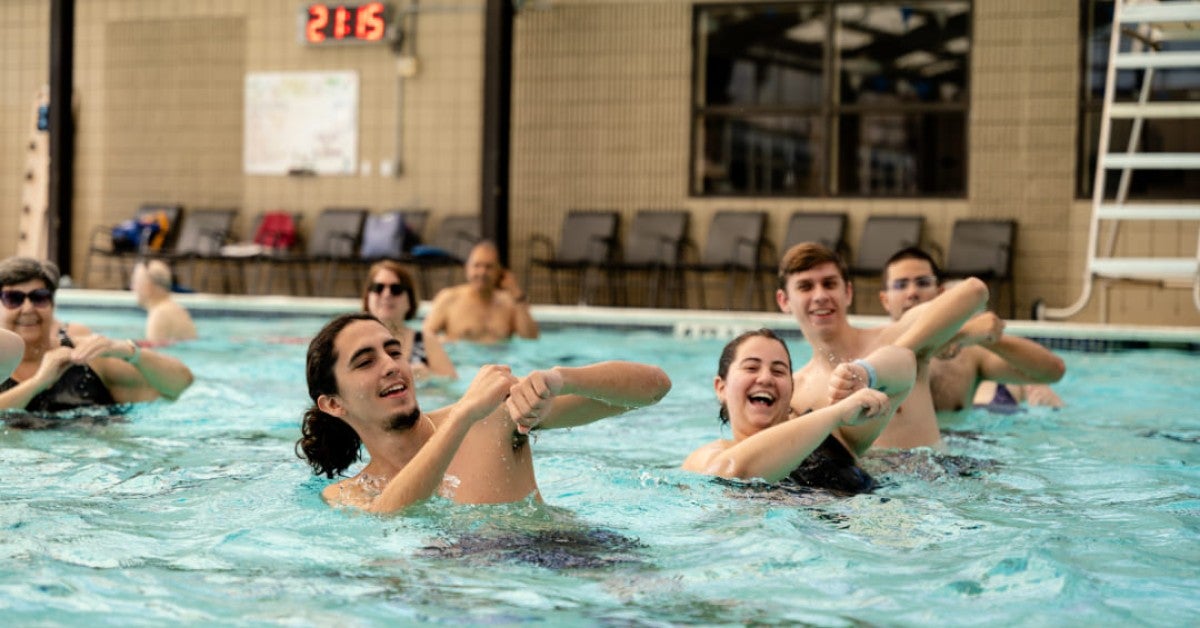
(Photo courtesy of YMCA of Greater Houston)
With data to guide us and dialogue to unite us, Houston can become a city known not just for its diversity and growth, but for its connectedness.
By Stephen Ives
Ives is president and CEO of the YMCA of Greater Houston, which serves nearly 400,000 members and program participants annually across the region.
In 2023, then-U.S. Surgeon General Dr. Vivek Murthy declared loneliness a public health crisis, urging organizations like the YMCA to step forward. For the YMCA of Greater Houston, his call aligned directly with our evolving strategic vision: to transform how people experience community, measured by their experiences of achievement, belonging and connection.
Over the past several years, we have leaned into that charge. We’ve asked ourselves not just how many people we serve, but how deeply they feel connected, how strongly they experience belonging and how clearly they see their own potential for achievement.
These are not “extras” in our work — they are outcomes that transform communities. When residents feel a stronger sense of belonging, youth are more empowered, families grow healthier and neighborhoods become more inclusive. When achievement and connection are cultivated, our community becomes safer and more resilient.
This vision led us to connect with the Kinder Institute for Urban Research. We wanted to move beyond “you may be surprised that the Y is” anecdotes and find ways to measure what people are truly experiencing. We were excited when the Kinder Institute agreed to field some questions on connectedness, belonging and achievement in its Greater Houston Community Panel survey of more than 5,000 local residents.
Connectedness emerged as a central theme, and we believe it is key to shaping Houston’s future. Historically, the YMCA has been seen as a place for fitness and youth programs. But at our core, we are about belonging — and this research informs the next evolution of how we deliver on that promise.
Why the ‘Y’ cares
At the YMCA, we have always been about relationships. Families enroll their children in swim lessons or youth sports not only to learn skills, but to find belonging. Seniors show up for group exercise and stay for the conversation over coffee. People walk through our doors for programs, but they stay because they are seen, known and supported.
Belonging is not an accessory to our mission. It is the mission. When people feel connected, they thrive. When communities are connected, they are healthier, safer and more resilient.
The Kinder Institute’s study reinforces why this work matters. Their findings show that young adults between 18 and 29 are experiencing more loneliness and disconnection than any other age group. Residents earning less than $35,000 annually are more likely to feel disconnected and to report having less social support.
Most strikingly, loneliness, connectedness and social support were stronger predictors of people’s self-efficacy than race, income or age. The lonelier someone feels, the lower their belief in their capacity for achievement. Conversely, the more connected and supported someone feels, the higher their belief that they can overcome obstacles and achieve goals.
These findings should challenge us. If we want a city where young adults flourish, families in every income bracket thrive and achievement is accessible to all, we cannot afford to treat loneliness as a private struggle. It is a community issue with real consequences for Houston’s future.
What comes next
The YMCA will use these findings to sharpen our efforts. That may mean designing spaces that spark more intergenerational connection, deepening partnerships with schools and nonprofits, or offering programs that intentionally address social isolation.
But our role is not only programmatic. It is also civic. The Y has a platform and a trusted voice in this community, and we will use both to elevate the Kinder Institute’s findings. This research should not sit on a shelf. It should spark conversations — in neighborhoods, city halls, classrooms and faith communities.
Houston is one of the most diverse cities in the nation. But diversity alone does not guarantee connection. If anything, it can sometimes mask division. The real question is whether every Houstonian can truly say “I belong here.”
Addressing that question requires more than nonprofits working in isolation. It requires dialogue across sectors. That is why our call to action is this: Let’s bring more pastors, faith leaders and community service organizations into the conversation. These are trusted voices who sit at the center of people's lived experiences of belonging. Together, we can create spaces for honest dialogue about what connection looks like, and how we can foster it more intentionally.
We cannot solve loneliness alone — no one institution can. But together, with data to guide us and dialogue to unite us, Houston can become a city known not just for its diversity and growth, but for its connectedness.
At the YMCA of Greater Houston, we are ready to do our part. The question is: Who will join us?
--
Urban Edge regularly features commentary on topics related to the Kinder Institute's primary areas of research focus. The views expressed in this post are those of the author and do not necessarily reflect the views of the Kinder Institute for Urban Research.
Young adults and low-income earners report feeling less connected and supported.
6100 Main St. MS-208
Houston, TX 77005-1892
kinder@rice.edu
713-348-4132
Subscribe to our e-newsletter
Rice University
Kraft Hall
6100 Main Street, Suite 305
Houston, TX 77005-1892
Support the Kinder Institute
• Read the full article to understand what the research found about loneliness in Houston
• Share the piece with a pastor, nonprofit leader, or faith community you're connected to
• Reach out to the Kinder Institute at kinder@rice.edu or 713-348-4132 to learn more about the research
• Subscribe to the Kinder Institute's Urban Edge newsletter for ongoing community research insights
• Consider how your own organization or neighborhood group could create more spaces for connection