"Houston is facing a budget shortfall of more than $200 million. Rising costs — especially for police and fire — are outpacing the city's tax revenue. A voter-approved cap has limited property tax growth since 2015. Without changes, the deficit could grow to more than $500 million by 2031. This budget tries to buy time and stabilize city finances."
Houston Mayor John Whitmire's proposed $7.5 billion budget aims to close a projected $200 million deficit without raising taxes. The plan moves solid waste services out of the city's general fund and into the water and sewer utility. A new $5 monthly fee — costing most households $60 a year — would be the only direct new charge to residents. The changes are projected to shrink the deficit to about $25 million.
Houston Mayor John Whitmire's proposed $7.5 billion budget would hold off a crisis-inducing deficit, but the only truly new source of revenue doesn't close the gap, and overall spending is slated to go up, not down.
Unveiled on Tuesday, the budget would be balanced by shuffling solid waste services and overhauling the water and sewer utility's financial structure. According to the administration, the only hit to Houstonians' bottom line would come in the form of a new, $5 monthly fee.
As the sole, truly new source of revenue, the fee would raise just over $20 million per year. However, the city projected a more than $200 million deficit — so how does the plan close the gap?
The city's solid waste department, which serves about 400,000 customers, has an annual budget of just over $100 million.
Its budget currently sits in the city's approximately $3 billion general fund, which supports most municipal departments, including police, fire, parks and libraries.
Under Whitmire's plan, solid waste services would move from the general fund to become part of the water and sewer utility. Like other major cities in Texas, Houston provides water and wastewater services through a municipal utility — an entity separate from the central city government, operating on a fee structure rather than relying on sales and property taxes.
That move would save the city more than $100 million a year in general fund spending, cutting the projected deficit in half.
The plan would establish a monthly fee of $5 to support solid waste services, costing most households an additional $60 a year.
According to a study released this week by the administration, the true per-customer cost of those services is nearly $25 per month for each customer. The new charge doesn't even cover the full cost of administrative services for solid waste of about $7.57, so Whitmire is calling it an “administrative fee" rather than a "garbage fee."
Under Whitmire's plan, Houston would become the only major city to provide solid waste services under a public utility structure. All other cities charge customers a monthly fee — ranging from $14 to $65 — but that revenue is held in a special fund used only for garbage and recycling.
The gap between the $5 fee and the true cost of about $25 per month — which comes out to $100 million per year — would be made up by the water and wastewater utility's fund balance, basically its savings account. It's expected to sit at nearly $1.5 billion at the end of the current fiscal year in June.
That wouldn't be the only drain on the utility's fund balance.
Municipal utilities across Texas provide basic essential services. In San Antonio and Austin, residents pay fees for water and electricity. In Dallas and Houston, customers only pay public utilities for water while energy is privatized.
Water, sewer and power lines run along city streets. Houston is the only major city to not charge its utility for using those public right-of-ways.
Under Whitmire's plan, the water and sewer utility would pay the city 5% of its revenue each year. The charge is projected to bring in more than $100 million in the 2027 fiscal year. The sum would also come from the utility's fund balance.
In other major cities, right-of-way charges range from 4% of revenue to 14% of revenue.
Water rates for the 5.3 million customs served by Houston Water have crept up in recent years as the utility grapples with sewage overflows and aging infrastructure. According to Whitmire's administration, the new charge would not affect the cost-of-service analysis that determines how much customers pay for water.
By moving an approximately $100 million department out of the general fund and redirecting about $100 million in revenue from the utility to the general fund, the deficit would shrink from more than $200 million to about $25 million.
The restructuring would dramatically improve the five-year fiscal forecast, which previously called for deficits to ramp up from $209 million in 2027 to nearly $523 million in 2031. Instead, the annual gap would stay below $175 million through 2031.
Still, the plan for the 2027 fiscal year would leave only $77 million in wiggle room before the city's fund balance crosses the minimum threshold — meaning the revised projection for the 2028 gap of $115 million is untenable, requiring cuts to spending or new revenue.
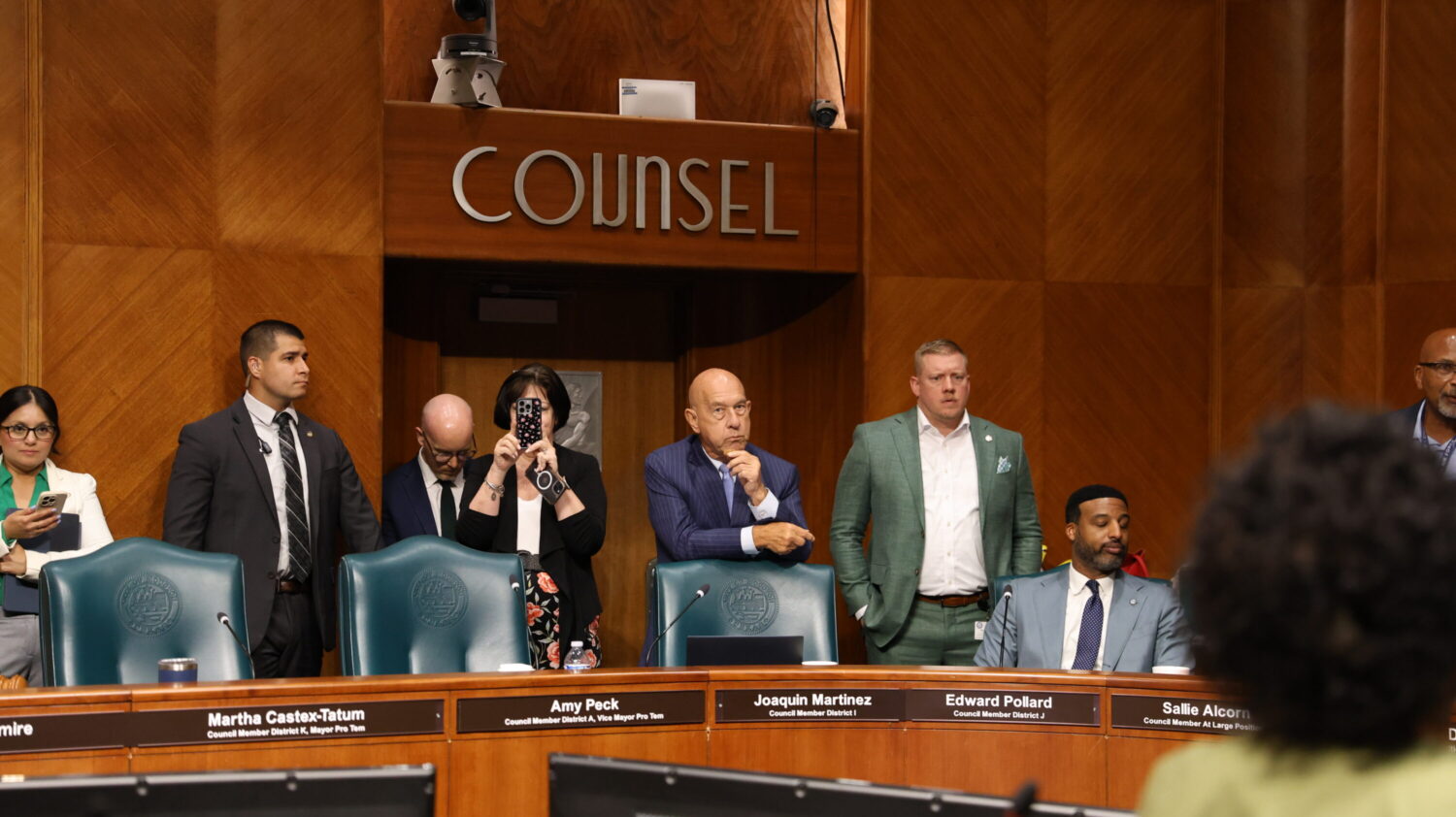
Eleven of the 16 city council members stood behind Whitmire as he unveiled his plan on Tuesday, signaling broad support for the proposal.
Council member Edward Pollard was not among them. He instead attended City Controller Chris Hollins' press conference, in which Hollins accused Whitmire of misleading the public about the city's financial position.
During a budget committee meeting on Wednesday, Pollard pressed Whitmire's finance director, Melissa Dubowski, about the more than $200 million drain on the water and wastewater utility's fund balance.
The utility system "pays for critical infrastructure needs — water, wastewater," Pollard said. "We are shifting solid waste there to draw down off that, and then we are charging that same system for a right-away fee."
Dubowski said long-term capital improvement projects would continue to move forward and day-to-day operations would be covered. Steven David, Whitmire's chief operations officer, joined her at the podium to push back on Pollard.
"We are continuing to engage in all of the expected capital improvement projects," David said. "We are not defunding or delaying any projects, and we are not going to restrict any of the operating money."
According to David, the Houston Public Works department has become more efficient under leadership installed by Whitmire, saving the utility system money.
Council member Sallie Alcorn, chair of the budget committee, stood behind Whitmire on Tuesday. She told Pollard she initially shared his concerns.
"I’ve asked the same questions you’re asking every which way because I’ve been a big proponent for keeping infrastructure money in infrastructure," Alcorn said. "I have been convinced that these are excess reserves not being used for all of the above — all of the things you’re talking about."
Council member Tiffany Thomas did not stand behind Whitmire on Tuesday. During the committee meeting, she expressed concerns about a solid waste-related fee on top of rising water bills. At the maximum level in six years, customers could face $300 in annual solid waste fees.
Thomas secured a promise from David that the administration would not seek a solid waste fee above the maximum of $25 outlined in the study released this week. In fact, David told her, the fee may not need to reach that level.
"We do not believe that the $25 calculation that was made during this analysis necessarily assumed that the department was efficient, and we do not believe that that is true," David said. "What we do expect to occur is that as $25 is highlighted as the cost of the department today, we believe that the cost of the department will decrease over time because we’re going to be driving more efficiencies into it."
Even with the structural changes, the city faces obstacles to long-term financial balance due to ballooning public safety costs tied to new agreements with the police and fire unions, as well as a voter-imposed cap on property tax revenue.
Public safety spending is slated to go up by nearly $75 million in the new fiscal year. At about $2 billion, the public safety budget represents 62% of the general fund budget.
Since the revenue cap took effect in 2015, the property tax rate has dropped by nearly 18%.
According to the city's finance department, the average homeowner in Houston — with a property valued at $320,000 — pays less than $2,000 annually in property taxes to the city of Houston. Since 2015, that homeowner has saved an average of about $419 per year — costing the city nearly $3 billion in revenue over the past decade.
Whitmire's proposal calls for the property tax rate to remain flat.
- Read the full Houston Public Media report to understand the tradeoffs in this budget plan.
- Check your water bill — the $5/month solid waste fee would likely appear there if the plan passes.
- Follow Houston City Council meetings to track the budget vote.
- Contact your City Council member if you have questions or concerns about the proposed fee or utility changes.
- Watch for updates from the City Controller's office, which has raised questions about how the plan is being presented to the public.