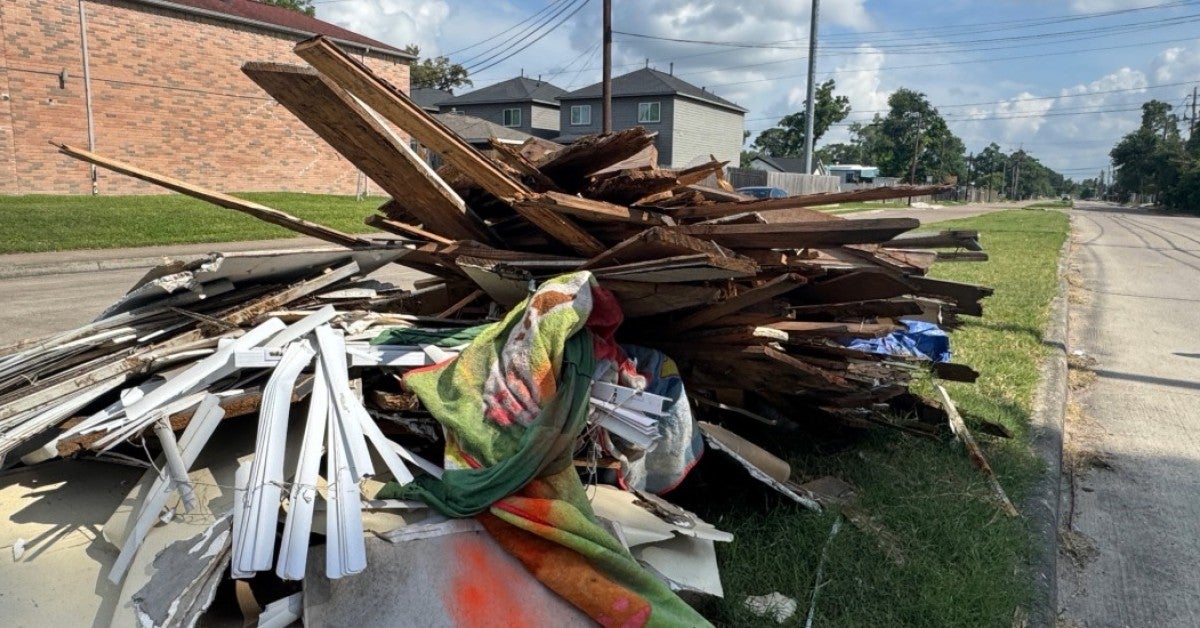
Illegal dumping keeps piling up in Houston's lowest-income neighborhoods — places like Acres Homes, Fifth Ward, and Sunnyside — even after a federal civil rights settlement pushed the city to spend $18 million on cleanup. The Trump administration ended federal oversight of that settlement in 2025. City 311 calls about illegal dumping topped 8,000 in 2024–2025, and community advocates say the city has not made good on all of its promises.
In 2023, Houston settled a federal civil rights complaint by launching One Clean Houston — a plan that included $11.5 million for extra trash cleanup, about $1 million for surveillance cameras and enforcement staff, and regular progress reports to federal monitors. The Department of Justice (DOJ) was supposed to oversee the plan for three years. The Trump administration ended that enforcement in 2025 as part of a wider pullback on environmental justice cases. City data shows slightly more dumped trash being collected than before, but 311 requests about illegal dumping are still rising, and community leaders say certain spots never get cleaned at all.
You do not have to wait for a federal agency to act. Reporting dumping through Houston 311 — by phone, app, or online — creates a public record that advocates and researchers use to hold the city accountable. Joining or supporting a local super neighborhood council gives community members a stronger voice when pushing the city for more trucks, staff, and cameras. And staying informed about proposals like a monthly garbage fee — which Houston currently does not charge, unlike other large Texas cities — helps you weigh in when elected officials debate funding options.
No fixed date
Not location-specific
This story connects to broader Houston conversations about environmental justice, neighborhood equity, and city services funding. Residents in Acres Homes, Greater Fifth Ward, Sunnyside, and Trinity/Houston Gardens have the highest concentration of 311 calls and unresolved dump sites. The question of a monthly garbage fee — supported by 65 percent of Houstonians at the $10 level in a 2023 Kinder Institute survey — ties directly to how the city might fund long-term solutions.
Illegal dumping is not just an eyesore. It is a civil rights issue. Federal investigators found that Houston's predominantly Black and Latino neighborhoods were left dealing with far more uncollected trash than wealthier parts of the city. Without federal oversight, advocates worry the city's commitment will fade — and the trash will stay.