Start with the plain guide. Open the deeper layers when you want the ecosystem around it.
IntensityNoticeRead, understand, orient.
StewardFoundation
1Orgs
0Policies
1Links
First readWhat to know+
Topic: Community survey results for Sunnyside and South Park neighborhoods in HoustonSource: Kinder Institute for Urban ResearchKey Finding: 60% of residents are satisfied with their neighborhoodSafety: Nearly 75% of parents say it is safe for kids to play outsideReading Time: About 1 minute
Next rungHow to step in+
Good first step: Share Neighbors and community members in Sunnyside and South Park
Hey, did you know a study says our neighborhood has a strong community? People here look out for each other and want good things for their kids. Check out what the Kinder Institute found about Sunnyside and South Park!
Time and placeWhere this sits+
Our NeighborhoodKinder Institute for Urban Research, Rice University
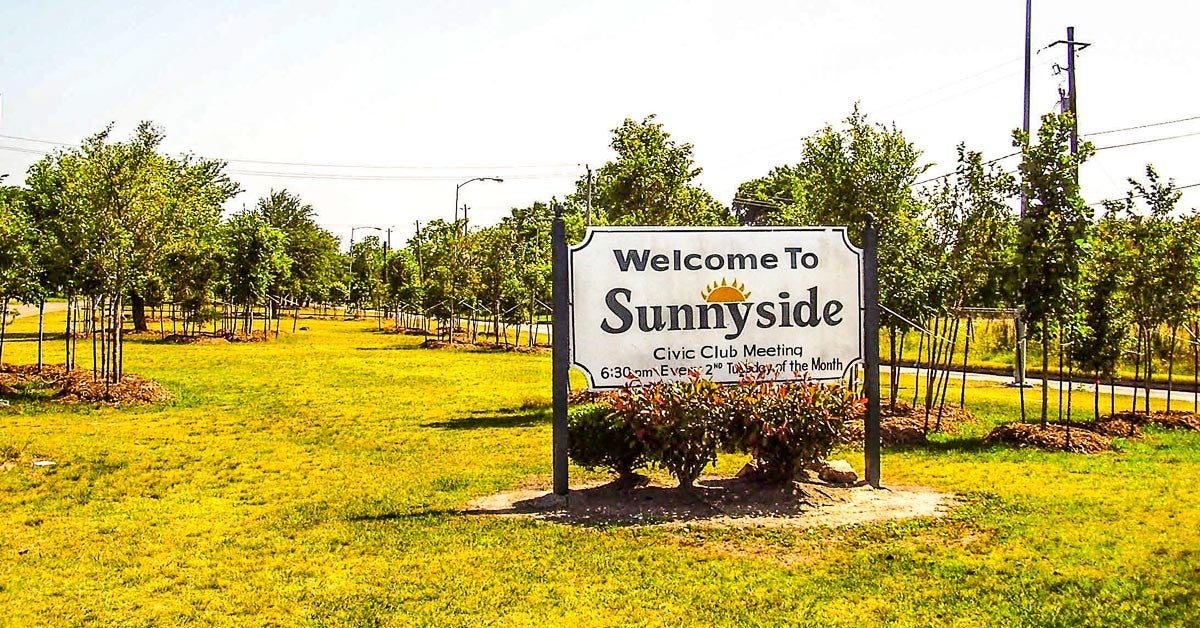
A community survey called Sunnyside Strong found real reasons for hope in Houston's Sunnyside and South Park neighborhoods. Residents report strong bonds with their neighbors, high civic participation, and solid satisfaction with their community — even while facing real economic and safety challenges. Researchers say that strong social fabric is exactly what makes future investment in the area most likely to succeed.
The Sunnyside Strong survey was a joint effort by Rice University's Baker Institute for Public Policy, the Kinder Institute for Urban Research, the Houston Area Urban League, and community leaders from Sunnyside and South Park. Researchers asked residents about safety, housing, health, transportation, education, and neighborhood life. Key findings: 60% of residents said they are satisfied with their neighborhood. Nearly three out of four parents said it is safe for children to play outside. Collective efficacy — the idea that neighbors trust and look out for each other — was high. Civic participation, including voter turnout, was strong. A striking 98% of parents with children under 18 expected those kids to go to college. On the challenging side, flooding and poor drainage topped the list of concerns. Close to a third of residents had homes damaged by hurricanes Harvey or Ike, and nearly 40% of those homes had not yet been repaired. Crime and fear of crime also limited how freely many residents moved around the neighborhood on foot.
If you live in or care about Sunnyside or South Park, this survey gives you a language and a data set to advocate with. You can point to hard numbers showing community strength when talking to city officials, developers, or funders. If you work in community development, urban planning, or public health anywhere in Houston, the survey's community-engaged research model — where a neighborhood advisory board helped shape every step — is a practical example worth borrowing. The findings also remind all of us that revitalization works best when it starts with what a community already has, not just what it lacks.
No fixed date
Not location-specific
This survey connects to broader conversations happening across Houston about equitable development, flood resilience, and how historically Black neighborhoods can shape their own futures. It also ties into ongoing work around hurricane recovery, since many Sunnyside and South Park homes damaged by Harvey and Ike still need repairs. Readers interested in gentrification and neighborhood change may also want to explore the Kinder Institute's 2018 report on gentrification in Harris County, which found Sunnyside has a high probability of gentrifying — a factor residents are already thinking carefully about.
Understanding what a neighborhood does well — not just what it struggles with — helps residents, planners, and funders make smarter decisions. Sunnyside and South Park have a track record of neighbors looking out for each other, showing up to vote, and dreaming big for their kids. That kind of community strength is hard to build from scratch. Knowing it already exists here is valuable for anyone who wants to see the area thrive.