Playrise is a nonprofit that creates modular playgrounds for refugee children around the world. These playgrounds use simple wooden parts that kids help build themselves. The designs work in extreme weather and can be customized for different spaces. When children help build their own play areas, they learn construction skills and feel proud of what they create together. Play helps kids heal from trauma and make friends in new communities. Houston has one of the largest refugee populations in America. Many families arrive here after experiencing war or violence. Our city resettles refugees from Afghanistan, Ukraine, Central America, and other regions through agencies like Interfaith Ministries and Catholic Charities. These children need safe spaces to play and connect with others. While Playrise works internationally, Houston residents can support similar local efforts. We have organizations building playgrounds in underserved neighborhoods and refugee communities. Groups like KaBOOM! and local community centers create play spaces that bring families together. You can volunteer with playground builds through Houston Parks and Recreation or neighborhood associations. Contact organizations like New Neighbors or Refugee Services of Texas to learn about supporting refugee children in our city. When we help kids play and heal, our whole community grows stronger.
When photographer Alexander Meininger became a father, he watched his children play and learned how important playgrounds are for kids. After seeing children displaced by war in Ukraine, he started thinking about refugee children who had lost their homes and schools.
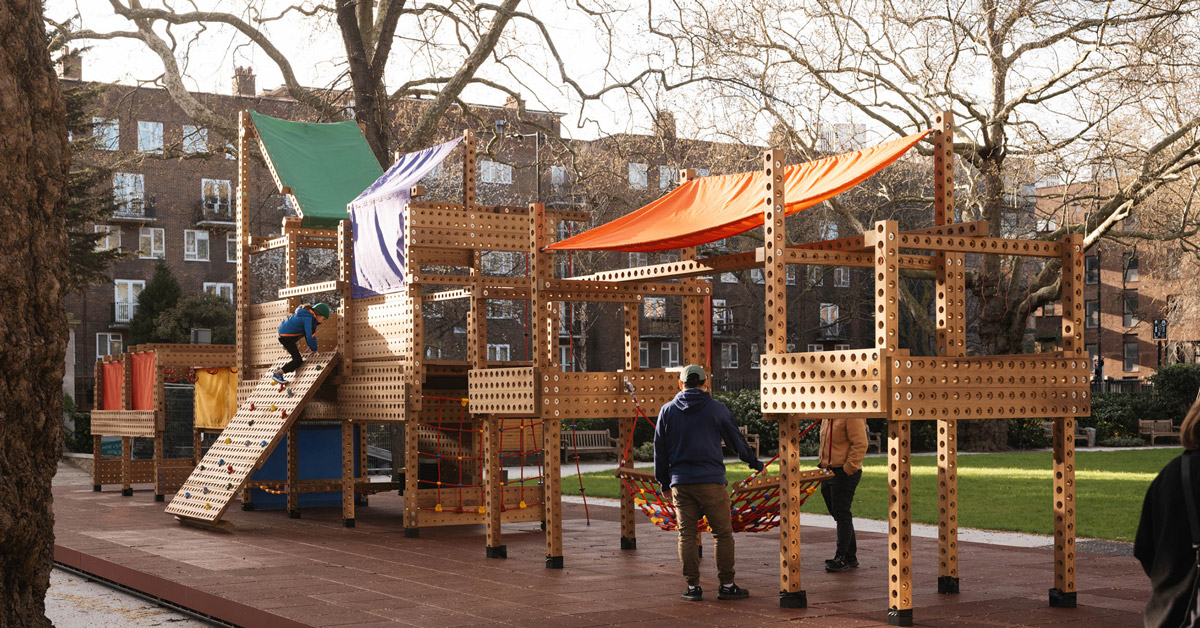
Meininger created Playrise, a nonprofit that builds modular playgrounds for children in war zones and refugee camps. Working with architecture studio OMMX, our team designed play structures from simple wood pieces that snap together easily. Kids can customize them with monkey bars, hammocks, basketball hoops, and climbing ropes.
The designers talked directly with Sudanese, Palestinian, and Eritrean child refugees to learn what they wanted. Children's drawings and ideas shaped the final designs. In Aysaita, Ethiopia, a refugee camp with 10,000 children under age 10 and no playgrounds, families reported that kids helped build the sample structures themselves.
The playgrounds use timber instead of metal so they stay cool in desert heat. All parts fit together with standard tools and can be taken apart and moved. The structures keep little fingers safe and work on different ground types, from sand to concrete.
Playrise will deploy their first full playground in Ethiopia within the next month. Refugee camps in Cairo and other locations will follow. Play helps children heal from trauma, build friendships, and create the connections that keep communities strong.