Overview
The Houston Progressive Caucus filed formal ethics complaints against Mayor John Whitmire with three government agencies over his new podcast "901 Bagby: Inside the Mayor's Office." The complaints target the $60,000 in public funds used to create the podcast, arguing that Whitmire's comments about future elections violate state ethics rules. During the first episode, Whitmire briefly mentioned re-election and politics while discussing his confidence in the city's direction. The caucus claims this crosses the line into political advertising using taxpayer money, which Texas law prohibits. The complaints were filed with the Texas Ethics Commission, Houston's Inspector General, and the City Controller's waste, fraud and abuse division. These agencies investigate whether public officials properly use taxpayer funds and follow ethics rules. This matters because how our elected leaders spend public money affects every Houston resident. When officials use city funds for activities that might benefit their campaigns, it raises questions about fairness and proper use of our tax dollars. The $60,000 could have funded other city services like parks, roads, or public safety. Houston residents can stay informed about this investigation by following updates from the ethics agencies and attending city council meetings where budget decisions are discussed. Citizens can also file their own complaints if they see potential ethics violations by contacting the Inspector General's office or Texas Ethics Commission directly.
Why it matters
Every decision about your streets, your schools, your taxes, your safety — someone made it. That someone is an elected official who answers to you. Understanding how civic decisions get made is the first step toward shaping them. This isn't just politics. It's your daily life.
“Houston Progressive Caucus filed ethics complaints against Mayor Whitmire over his $60,000 taxpayer-funded podcast that may violate political advertising rules.”
Who this is for
You want to understand how government works
See clearly who holds power, how decisions are made, and where your voice fits in.
You're frustrated and want to do something
This resource points toward concrete, realistic ways to engage — not just awareness.
You want to hold officials accountable
Know who represents you, what they've decided, and how to reach them directly.
Go deeper
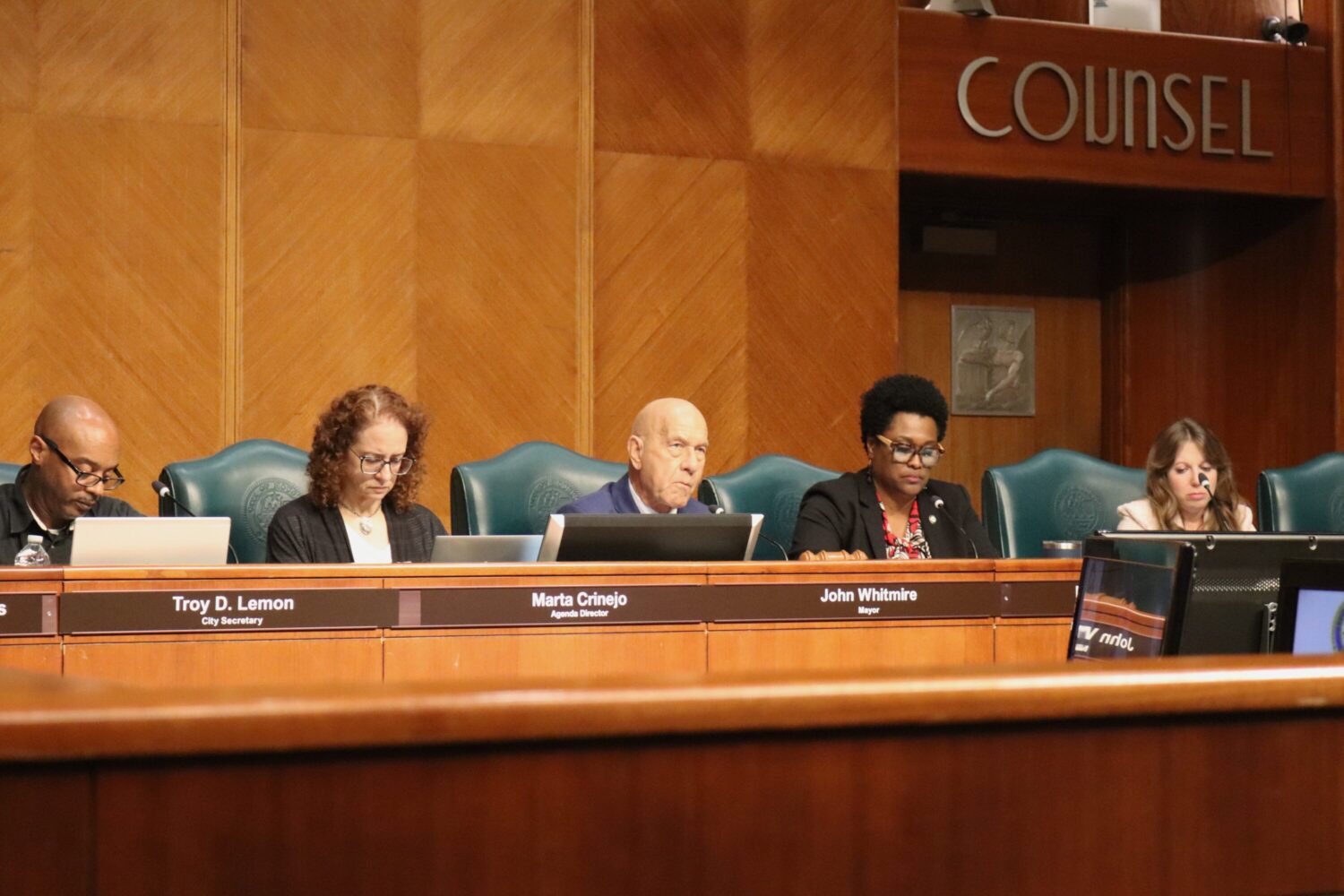
Mayor John Whitmire is facing formal ethics complaints from the Houston Progressive Caucus over his new podcast, "901 Bagby: Inside the Mayor's Office."
According to members of the caucus, the group filed grievances over the past week with the Texas Ethics Commission, the city of Houston's Inspector General, and the City Controller's waste, fraud and abuse division.
The complaints came after Houston Public Media obtained documents showing the podcast costs up to $60,000 in public funds. Because the podcast is taxpayer-funded, the group argued Whitmire's brief allusion to next year's municipal election during the first episode of the podcast ran afoul of state ethics rules around political advertising.
"We can’t be using taxpayer funds for an elected official to be pontificating or talking about or giving opinions about their future elections," said Audrey Nath, co-chair of the caucus. "He should reimburse the people of Houston. Pay back the $60,000 from his own campaign funds."
In the first episode, podcast host and former KPRC 2 anchor Owen Conflenti — owner of Conflenti media, which the city paid $60,000 for "advertising services" — asked Whitmire about his relationship with previous mayors of Houston.
After answering the question and reflecting on term limits, Whitmire said, “I’m so confident that we're on the right track that I don't — I don't worry about the politics or re-election.”
“You win elections in between elections,” Whitmire told Conflenti. “I don't have time for politics.”
The Texas Ethics Commission (TEC) enforces state laws concerning ethics and campaign finances. Under state law, public dollars cannot be used for political advertising.
Responding to a question from Houston Public Media, legal assistant Lindsay Powers with the TEC defined political advertising as "a communication supporting or opposing a candidate for nomination or election to a public office," but said the TEC "cannot make determinations regarding the sufficiency of political advertising for a podcast” in response to a news media inquiry.
In a statement after this story was first published, Whitmire’s office said the podcast is “another communications channel the City is utilizing to keep the public informed and engaged. It serves the same purpose as social media, press releases, and other public forms of communication.” The contracting process with Conflenti Media “was conducted in accordance with the existing city ordinances and procurement guidelines,” his office added.
“The podcast is not a campaign communication; any questions about campaign activity should be directed to the John Whitmire Campaign,” Whitmire’s office stated. “The Texas Ethics Commission defines campaign communications as ‘Express Advocacy.’ The podcast will be informative and feature guests beyond the Mayor, but will not feature any campaign content for measures or candidates.”
Whitmire’s campaign did not respond to a request for comment.
Nancy Sims, a political science lecturer at the University of Houston, said Whitmire’s election-related comments on the podcast fell into the "gray zone," while campaign ethics attorney Andrew Cates said, “It's close, but it's not overtly against any laws or regulations that I know of.”
The city of Houston's legal department — which houses the office of inspector general — and the city controller's office did not comment on the complaints.
In addition to ethical complaints, the members of the Houston Progressive Caucus argued the podcast expense constituted waste as the city faces a daunting budget deficit — projected to exceed $170 million as the fiscal year ends in June.
"I think every one of us that has used YouTube and social media knows that engaging with the public by speaking does not cost $60,000," Nath said. "It’s just such a waste, and in a time of a budget crisis, that doesn’t seem right."
Over the last two months, the mayor's office published four episodes of the podcast on audio streaming platforms and YouTube. Running from 17 to 24 minutes and featuring only Conflenti and Whitmire, the segments have covered the mayor's initiative to address homelessness, the growing size of the Houston Police Department (HPD) and preparations for the seven FIFA World Cup matches kicking off in Houston in June.
The most recent episode on Apr. 23 addressed Whitmire's relationship with Texas Governor Greg Abbott, who threatened to revoke more than $110 million in public safety grants to Houston unless the city fully cooperated with U.S. Immigration and Customs Enforcement (ICE). After the threat, Whitmire pushed for a revision of the city's policy governing how HPD and ICE interact.
RELATED: Revised HPD-ICE policy allows city police to hold people ‘reasonable amount of time'
"I’ve probably voted against Greg Abbott more than any living human," Whitmire, a 50-year member of the Texas Legislature, said during the episode. "He knows that I’ll tell him when he’s wrong. I disagree with him, but my commitment is to all of us Houstonians."
It's unclear how many episodes or what span of time the $60,000 payment to Conflenti Media covered. Whitmire's office withheld the agreement with the firm, and Conflenti did not respond to requests for comment.
The complaints from the Houston Progressive Caucus aren't the first clash between the group and Whitmire. In December, the group led the charge to admonish Whitmire and revoke his ability to receive the endorsement of the Harris County Democratic Party. At the time, Whitmire described the individuals responsible for the admonishment as "a small portion of the Democratic electorate."
Editor’s note: This story was updated at 7:27 p.m. on Apr. 27, 2026, with a statement from Whitmire’s office.